从聊天机器人到智能体的演进
📖 "要理解 Agent 是什么,最好的方式是看看它是从哪里来的。"
一段简短的历史
AI 与人类的交互方式经历了一段漫长而精彩的演进旅程。让我们坐上时光机,快速回顾这段历史:
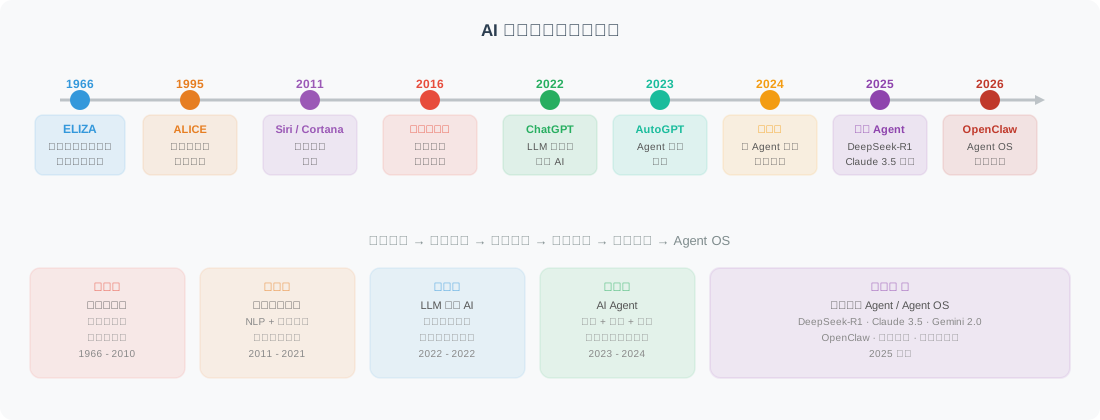
第一代:基于规则的聊天机器人
最早的聊天机器人完全依赖预设规则。1966 年 MIT 的 Joseph Weizenbaum 创造了 ELIZA [1]——这是历史上第一个能与人类"对话"的计算机程序。它通过简单的模式匹配来"伪装"成一个心理咨询师:
# 第一代:基于规则的聊天机器人(模拟 ELIZA 的思路)
# 核心原理:模式匹配 + 模板回复

def rule_based_chatbot(user_input: str) -> str:
    """
    最原始的聊天机器人:基于关键词匹配规则
    - 没有理解能力
    - 只能处理预设的场景
    - 遇到未知输入就"抓瞎"
    """
    user_input = user_input.lower()  # 统一转小写

    # 规则1:问候语
    if any(word in user_input for word in ["你好", "hi", "hello"]):
        return "你好!有什么我可以帮你的吗?"

    # 规则2:关于天气
    if "天气" in user_input:
        return "今天天气不错,适合出门哦!"

    # 规则3:关于时间
    if "时间" in user_input or "几点" in user_input:
        return "现在是工作时间,请问有什么需要?"

    # 兜底回复(遇到不认识的输入)
    return "抱歉,我不太理解你的意思。能换个方式说吗?"

# 测试
print(rule_based_chatbot("你好"))        # ✅ 能处理
print(rule_based_chatbot("今天天气怎样")) # ✅ 能处理
print(rule_based_chatbot("帮我订机票"))   # ❌ 无法处理 → 兜底回复
这种方式的问题显而易见:
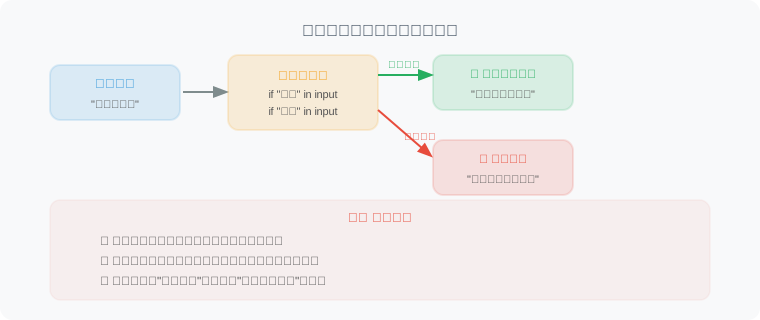
| 问题 | 说明 |
|---|---|
| 🔴 理解能力为零 | 只是匹配关键词,不理解语义 |
| 🔴 规则爆炸 | 场景越多,规则越多,维护成本指数增长 |
| 🔴 无法泛化 | "天气好吗"能回答,"出门要带伞吗"就不行 |
| 🔴 无状态 | 不记得之前说过什么,每轮对话都是独立的 |
第二代:基于意图识别的对话系统
2016 年左右,NLP 技术的发展催生了一批更智能的对话系统。苹果 Siri(2011)、微软 Cortana(2014)等虚拟助手相继问世,它们的核心思路是:先识别用户的意图,再做出相应的处理 [2]。
# 第二代:基于意图识别的对话系统(简化演示)
# 核心原理:意图分类 + 槽位填充 + 对话管理

from dataclasses import dataclass
from typing import Optional

@dataclass
class Intent:
    """用户意图"""
    name: str           # 意图名称,如 "查天气"、"订机票"
    confidence: float   # 置信度 0~1
    slots: dict         # 槽位信息,如 {"城市": "北京", "日期": "明天"}

def classify_intent(user_input: str) -> Intent:
    """
    意图识别(这里用规则模拟,实际中使用 NLP 模型)
    进步:能识别用户"想做什么"
    不足:意图是预定义的,无法处理开放域问题
    """
    if "天气" in user_input:
        # 尝试从输入中提取城市信息(槽位填充)
        city = "北京"  # 实际中会用 NER 模型提取
        return Intent(name="查天气", confidence=0.95, slots={"城市": city})
    elif "机票" in user_input or "航班" in user_input:
        return Intent(name="订机票", confidence=0.88, slots={})
    else:
        return Intent(name="闲聊", confidence=0.5, slots={})

def handle_intent(intent: Intent) -> str:
    """
    根据识别到的意图,执行对应的处理逻辑
    """
    handlers = {
        "查天气": lambda: f"正在查询{intent.slots.get('城市', '你所在城市')}的天气...",
        "订机票": lambda: "请告诉我出发城市、到达城市和日期。",
        "闲聊": lambda: "哈哈,你说得很有趣!",
    }
    handler = handlers.get(intent.name, lambda: "抱歉,我暂时无法处理这个请求。")
    return handler()

# 使用流程
user_input = "帮我查一下北京明天的天气"
intent = classify_intent(user_input)
print(f"识别意图: {intent.name} (置信度: {intent.confidence})")
print(f"回复: {handle_intent(intent)}")
第二代系统的处理流程:
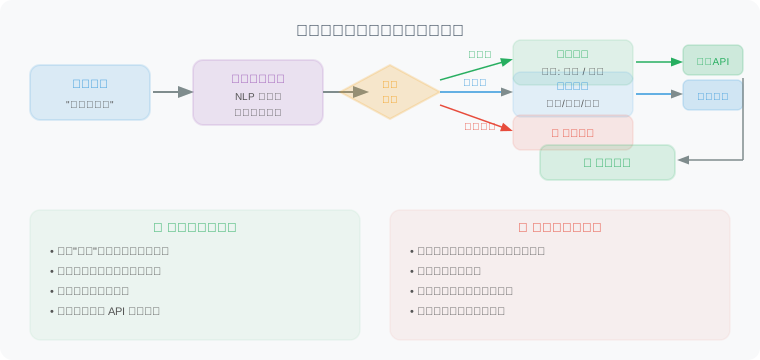
比第一代好在哪?
- ✅ 有了"理解"的雏形(意图识别)
- ✅ 能提取关键信息(槽位填充)
- ✅ 更结构化的对话管理
但依然存在的问题:
- 🔴 意图是预定义的,无法处理"意料之外"的请求
- 🔴 多轮对话能力有限
- 🔴 不能执行复杂的、需要多步骤的任务
第三代:LLM 驱动的对话 AI
2022 年底,ChatGPT 横空出世,带来了划时代的变革 [3]。大语言模型(LLM)不再需要预定义意图,它能理解任何自然语言输入:
# 第三代:LLM 驱动的对话 AI(以 OpenAI API 为例)
# 核心原理:大语言模型生成式回答

from openai import OpenAI

client = OpenAI()  # 需要配置 OPENAI_API_KEY

def llm_chatbot(user_input: str) -> str:
    """
    基于大语言模型的聊天机器人
    巨大进步:
    - 理解任何自然语言输入
    - 能进行推理和分析
    - 具有广泛的知识储备

    但仍然只是"嘴强":
    - 只能生成文本回复
    - 无法执行实际操作(不能真的查天气、订机票)
    - 知识有截止日期
    """
    response = client.chat.completions.create(
        model="gpt-4o",
        messages=[
            {"role": "system", "content": "你是一个有用的助手。"},
            {"role": "user", "content": user_input}
        ]
    )
    return response.choices[0].message.content

# LLM 可以理解各种表达方式
print(llm_chatbot("北京明天出门需要带伞吗?"))
# → "关于北京明天是否需要带伞,我建议你查看最新的天气预报..."
# 注意:它能理解问题,但无法真的去查天气!
LLM 对话 AI 的特点:
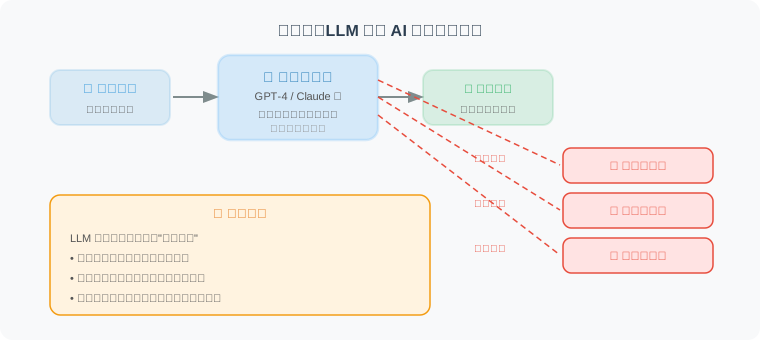
💡 LLM 知识渊博,但只能“纸上谈兵”,无法真正执行操作。
第四代:Agent —— 能说更能做
终于,我们来到了 Agent 时代。Agent 在 LLM 强大的理解和推理能力基础上,增加了行动能力 [4]。它不仅能理解你的需求,还能真正去执行:
# 第四代:Agent —— 不仅能理解,还能行动!
# 核心原理:LLM(大脑)+ 工具(手脚)+ 规划(策略)

import json
from openai import OpenAI

client = OpenAI()

# ========== 定义 Agent 可以使用的工具 ==========

def search_weather(city: str) -> str:
    """真正去查询天气的工具"""
    # 实际中会调用天气 API
    return json.dumps({
        "city": city,
        "temperature": "18°C",
        "condition": "多云转晴",
        "suggestion": "不需要带伞"
    }, ensure_ascii=False)

def book_flight(from_city: str, to_city: str, date: str) -> str:
    """真正去订机票的工具"""
    # 实际中会调用航空公司 API
    return json.dumps({
        "status": "已找到航班",
        "flight": "CA1234",
        "price": "¥1,280",
        "departure": f"{date} 08:00"
    }, ensure_ascii=False)

# ========== 工具描述(告诉 LLM 有哪些工具可用)==========

tools = [
    {
        "type": "function",
        "function": {
            "name": "search_weather",
            "description": "查询指定城市的天气信息",
            "parameters": {
                "type": "object",
                "properties": {
                    "city": {"type": "string", "description": "城市名称"}
                },
                "required": ["city"]
            }
        }
    },
    {
        "type": "function",
        "function": {
            "name": "book_flight",
            "description": "预订机票",
            "parameters": {
                "type": "object",
                "properties": {
                    "from_city": {"type": "string", "description": "出发城市"},
                    "to_city": {"type": "string", "description": "到达城市"},
                    "date": {"type": "string", "description": "出发日期"}
                },
                "required": ["from_city", "to_city", "date"]
            }
        }
    }
]

# ========== Agent 的核心逻辑 ==========

def agent(user_input: str) -> str:
    """
    一个简单的 Agent:
    1. 理解用户需求(LLM)
    2. 决定使用什么工具(推理)
    3. 调用工具执行操作(行动)
    4. 基于工具返回结果生成回复(总结)
    """
    print(f"🧑 用户: {user_input}")

    # 第一步:让 LLM 理解用户需求并决定是否需要调用工具
    response = client.chat.completions.create(
        model="gpt-4o",
        messages=[
            {"role": "system", "content": "你是一个能干的 AI 助手,可以查天气和订机票。"},
            {"role": "user", "content": user_input}
        ],
        tools=tools
    )

    message = response.choices[0].message

    # 第二步:如果 LLM 决定调用工具
    if message.tool_calls:
        tool_call = message.tool_calls[0]
        func_name = tool_call.function.name
        func_args = json.loads(tool_call.function.arguments)

        print(f"🤖 思考: 我需要调用 {func_name} 工具")
        print(f"🔧 工具参数: {func_args}")

        # 第三步:执行工具
        available_tools = {
            "search_weather": search_weather,
            "book_flight": book_flight
        }
        tool_result = available_tools[func_name](**func_args)

        print(f"📊 工具返回: {tool_result}")

        # 第四步:将工具结果交给 LLM,生成最终回复
        final_response = client.chat.completions.create(
            model="gpt-4o",
            messages=[
                {"role": "system", "content": "你是一个能干的 AI 助手。"},
                {"role": "user", "content": user_input},
                message,
                {"role": "tool", "content": tool_result, "tool_call_id": tool_call.id}
            ]
        )
        result = final_response.choices[0].message.content
    else:
        # LLM 认为不需要工具,直接回答
        result = message.content

    print(f"🤖 回复: {result}")
    return result

# 使用 Agent
agent("北京明天需要带伞吗?")
# 🧑 用户: 北京明天需要带伞吗?
# 🤖 思考: 我需要调用 search_weather 工具
# 🔧 工具参数: {"city": "北京"}
# 📊 工具返回: {"city": "北京", "temperature": "18°C", "condition": "多云转晴", ...}
# 🤖 回复: 根据查询结果,北京明天天气多云转晴,温度18°C,不需要带伞。
#          可以放心出门!
四代演进对比总结
下面这张图清晰地展示了四代 AI 交互方式的核心区别:
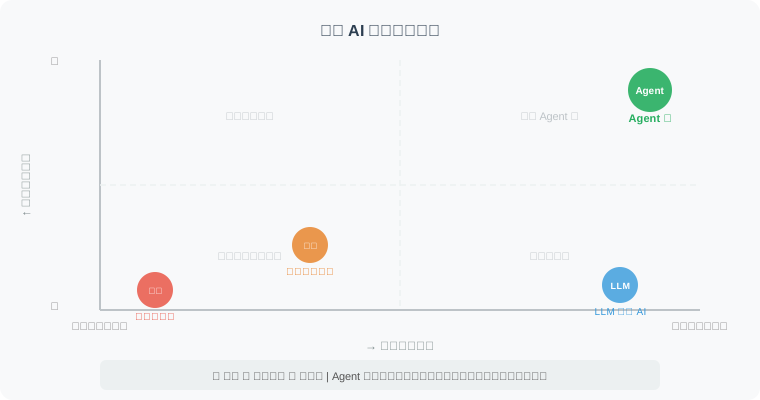
| 能力 | 规则机器人 | 意图识别 | LLM 对话 AI | Agent |
|---|---|---|---|---|
| 语言理解 | ❌ | 🟡 | ✅ | ✅ |
| 开放域对话 | ❌ | ❌ | ✅ | ✅ |
| 使用工具 | ❌ | 🟡 | ❌ | ✅ |
| 自主决策 | ❌ | ❌ | ❌ | ✅ |
| 任务执行 | ❌ | 🟡 | ❌ | ✅ |
| 多步规划 | ❌ | ❌ | ❌ | ✅ |
| 自我纠错 | ❌ | ❌ | 🟡 | ✅ |
图例:✅ 支持 🟡 部分支持 ❌ 不支持
关键洞察
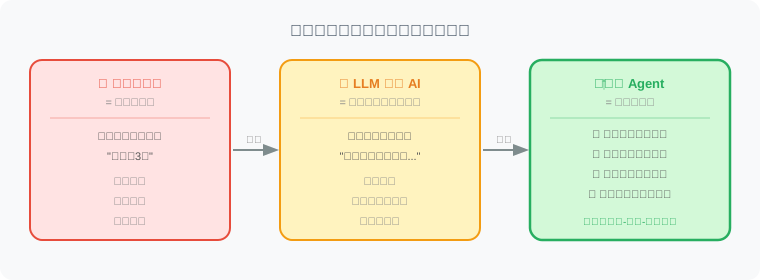
💡 Agent 的本质飞跃在于:从"只会说"到"能做事"。
- 聊天机器人 = 嘴(只能对话)
- Agent = 大脑 + 嘴 + 手脚(能思考、能说话、能行动)
用一个生活类比来理解:
本节小结
- AI 交互方式经历了 规则 → 意图识别 → LLM → Agent 四个阶段
- 每一代都在前一代的基础上增加了新的能力
- Agent 的核心突破是:在 LLM 的理解和推理能力上,增加了行动能力
- Agent 可以使用工具、执行任务、做出决策,而不仅仅是生成文本
🤔 思考练习
- 你日常使用的 AI 产品(如 Siri、ChatGPT、Copilot)分别属于哪一代?
- 想一想,如果给 ChatGPT 配上"手脚"(工具),它能帮你完成哪些目前做不到的事?
- 你认为 Agent 的下一代演进方向可能是什么?
在下一节中,我们将正式给出 Agent 的定义,并深入了解它的核心特征。
参考文献
[1] WEIZENBAUM J. ELIZA — A computer program for the study of natural language communication between man and machine[J]. Communications of the ACM, 1966, 9(1): 36-45.
[2] CHEN H, LIU X, YIN D, et al. A survey on dialogue systems: Recent advances and new frontiers[J]. ACM SIGKDD Explorations Newsletter, 2017, 19(2): 25-35.
[3] OPENAI. GPT-4 technical report[R]. arXiv preprint arXiv:2303.08774, 2023.
[4] XI Z, CHEN W, GUO X, et al. The rise and potential of large language model based agents: A survey[R]. arXiv preprint arXiv:2309.07864, 2023.