测试生成与 Bug 修复
本节目标:让 AI 编程助手自动生成单元测试,并能定位和修复代码中的 Bug。
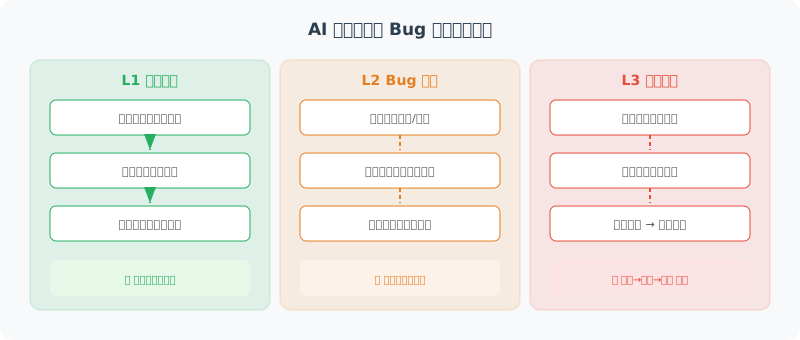
测试策略概述
AI 编程助手在测试领域可以发挥三个层次的作用:
| 层次 | 能力 | 说明 |
|---|---|---|
| L1 测试生成 | 自动生成单元测试 | 分析函数签名和逻辑,生成测试用例 |
| L2 Bug 诊断 | 分析错误并定位根因 | 理解错误信息、堆栈跟踪、代码逻辑 |
| L3 自动修复 | 生成修复代码并验证 | 修复 → 运行测试 → 确认通过的闭环 |
自动生成测试
class TestGenerator:
    """自动测试生成器"""

    def __init__(self, llm):
        self.llm = llm

    async def generate_tests(
        self,
        source_code: str,
        file_path: str,
        framework: str = "pytest"
    ) -> str:
        """为给定代码自动生成测试"""

        prompt = f"""请为以下代码生成全面的单元测试。

源代码文件:{file_path}
```python
{source_code}
测试框架:{framework}
要求:
- 为每个公共函数/方法生成至少 2 个测试用例
- 覆盖正常情况、边界情况和异常情况
- 测试名称要清晰表达测试意图
- 使用 {framework} 的最佳实践
请生成完整的测试文件代码。 """ response = await self.llm.ainvoke(prompt) return response.content
async def analyze_coverage(
    self,
    source_code: str,
    test_code: str,
) -> dict:
    """分析测试覆盖率,建议补充哪些测试"""

    prompt = f"""分析以下测试代码对源代码的覆盖情况。
源代码:
{source_code}
现有测试:
{test_code}
请分析:
- 哪些函数/分支已被测试覆盖
- 哪些函数/分支尚未覆盖
- 建议补充的测试用例
以 JSON 格式返回: {{ "covered": ["已覆盖的函数/分支列表"], "uncovered": ["未覆盖的函数/分支列表"], "suggestions": ["建议的测试用例描述"] }} """ response = await self.llm.ainvoke(prompt) import json return json.loads(response.content)
---

## Bug 定位与修复

```python
class BugFixer:
    """Bug 定位和修复器"""

    def __init__(self, llm):
        self.llm = llm

    async def diagnose_and_fix(
        self,
        code: str,
        error_message: str,
        file_path: str
    ) -> dict:
        """诊断并修复 Bug"""

        prompt = f"""以下代码运行时出现了错误,请帮我诊断并修复。

文件:{file_path}
代码:
```python
{code}
错误信息:
{error_message}
请分析:
- 错误的根本原因
- 出问题的代码位置
- 修复方案
以 JSON 格式回复: {{ "root_cause": "根本原因分析", "bug_location": "出问题的函数/行号", "fix_description": "修复方案说明", "fixed_code": "修复后的完整代码" }} """
    response = await self.llm.ainvoke(prompt)
    import json
    return json.loads(response.content)

async def suggest_preventive_measures(
    self,
    bug_info: dict
) -> list[str]:
    """基于 Bug 分析,建议预防措施"""

    prompt = f"""根据以下 Bug 分析,提出 3-5 条预防类似问题再次出现的建议:
根因:{bug_info['root_cause']} 位置:{bug_info['bug_location']} 修复:{bug_info['fix_description']}
请返回建议列表(每条一行)。 """ response = await self.llm.ainvoke(prompt) return response.content.strip().split('\n')
---

## 集成使用:测试-诊断-修复闭环

```python
async def fix_workflow(llm, code: str, test_code: str):
    """修复工作流:运行测试 → 发现失败 → 自动修复 → 验证修复"""

    fixer = BugFixer(llm)
    test_gen = TestGenerator(llm)

    # 1. 如果没有测试,先生成
    if not test_code:
        test_code = await test_gen.generate_tests(code, "main.py")
        print("✅ 已生成测试用例")

    # 2. 运行测试(简化演示)
    print("🧪 运行测试中...")
    # result = subprocess.run(["python", "-m", "pytest", ...])

    # 3. 如果有失败的测试,让 Agent 修复
    error_msg = "AssertionError: expected 42, got 0"

    fix_result = await fixer.diagnose_and_fix(
        code=code,
        error_message=error_msg,
        file_path="main.py"
    )

    print(f"🔍 原因: {fix_result['root_cause']}")
    print(f"🔧 修复: {fix_result['fix_description']}")
    print(f"📝 位置: {fix_result['bug_location']}")

    # 4. 验证修复(回归测试)
    print("🔄 回归测试:验证修复是否引入新问题...")
    # re-run tests with fixed code

    # 5. 预防建议
    preventive = await fixer.suggest_preventive_measures(fix_result)
    print("💡 预防建议:")
    for suggestion in preventive:
        print(f"  {suggestion}")

    return fix_result["fixed_code"]
最佳实践
在将 AI 生成的测试和修复集成到开发流程中时,需要注意:
best_practices = {
    "人工审查": "AI 生成的测试和修复建议必须经过人工审查后再合并",
    "增量测试": "先为新增/修改的代码生成测试,逐步覆盖已有代码",
    "测试质量": "检查 AI 生成的测试是否真正验证了业务逻辑,而非仅仅'凑覆盖率'",
    "修复验证": "自动修复后必须运行全量测试套件(回归测试),防止修复引入新问题",
    "记录与学习": "将常见 Bug 模式记录到知识库,帮助 Agent 提升诊断准确率",
}
小结
| 功能 | 说明 |
|---|---|
| 测试生成 | 自动为代码生成 pytest 测试用例 |
| Bug 诊断 | 分析错误信息,定位根本原因 |
| 自动修复 | 生成修复后的代码 |
| 修复工作流 | 测试 → 诊断 → 修复 的闭环 |
下一节预告:最后,我们将所有组件整合为一个完整的 AI 编程助手。