17.6 借鉴:可换内核 / 模型无关的工程哲学
🐋 "把'换能力'的成本从'改源码'降到'改配置'。"
一、本节核心问题
DeepSeek Harness 给全行业留下的最关键遗产不是"插件数量多"——
而是这个工程哲学:
任何一种 Agent 能力(模型 / 工具 / Skill / 子 Agent / 沙箱 / UI),都不应该被绑死。
当你把"可换性"做到这一层,你就再也不会被"某个商业产品停更 / 某个开源项目失去维护 / 某个模型被淘汰"卡脖子。
本节把这件事拆成 5 条可迁移的工程原则,让你带回自己的 Agent 系统。
二、原则 1:内核"薄",业务"野"
2.1 设计目标
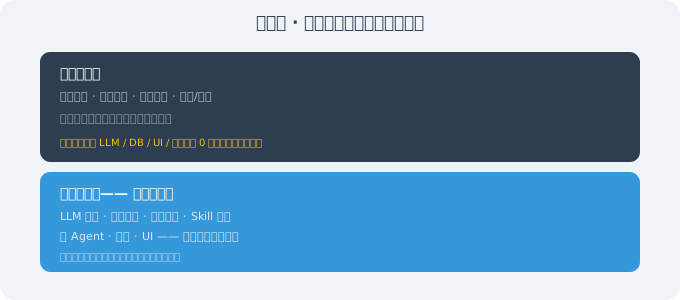
DeepSeek Harness 的内核(Cordis)几乎不承载任何业务能力——它只做插件调度。所有的"功能"都是"插件"。
把这件事转成自己系统的语言是:
2.2 借到自己的系统
# 反例:业务逻辑写在核心
class AgentLoop:
    def __init__(self):
        self.llm = OpenAIClient()      # 写死!换模型要改源码
        self.db = SQLiteStore()       # 写死!换 DB 要改源码

# 正例:业务逻辑通过接口注入
class AgentLoop:
    def __init__(self, llm, store, tools):
        self.llm = llm                 # 任意 LLM
        self.store = store             # 任意 Store
        self.tools = tools             # 任意 Tool

agent = AgentLoop(
    llm=AnthropicClient(...),
    store=RedisStore(...),
    tools=load_tools_from_plugins(),
)
判定准则:问自己"换 LLM / 换数据库 / 换 UI / 换沙箱,要改几行代码?"——答案是"改 0 行,只改配置",你就做对了。
三、原则 2:可降级 + 可降级链
3.1 DeepSeek Harness 的 fallback 链
{
  "llm": {
    "providers": ["deepseek-v4-pro", "anthropic-claude-4-7", "openai-gpt-4.1", "ollama-qwen3"],
    "routing": {
      "deepseek-v4-pro": {
        "primary": "deepseek-v4-pro",
        "fallback": ["anthropic-claude-4-7", "ollama-qwen3"]
      }
    }
  }
}
当 DeepSeek 端挂 → 自动切 Anthropic → 也挂 → 切本地 Ollama。任何一档挂了都不影响业务。
3.2 借到自己的系统
任何"外部依赖"都应该有 fallback:
| 外部依赖 | fallback |
|---|---|
| 主力 LLM | 二线 LLM → 本地 LLM |
| 主数据库 | 备用 DB → SQLite |
| 主邮件服务 | 备用 SMTP → 队列重试 |
| 主支付渠道 | 备用渠道 |
实现方式:
class FallbackChain:
    def __init__(self, *providers):
        self.providers = providers

    async def call(self, request):
        last_error = None
        for p in self.providers:
            try:
                return await p.call(request)
            except Exception as e:
                last_error = e
                continue
        raise AllFailedError(last_error)
四、原则 3:能力可换 + 接口稳定
4.1 DeepSeek Harness 的"接口稳定"做法
每个插件的能力挂到 ctx.<key> 上——这是约定而不是实现:
ctx.llm.stream(...)          // 不管 LLM 是 deepseek 还是 anthropic
ctx.tools.shell.run(...)     // 不管 shell 是 local 还是 docker
ctx.session.commit(...)      // 不管 session 是 sqlite 还是 redis
第三方插件可以稳定地写 ctx.llm.stream(...)——而具体实现可以随时换。
4.2 借到自己的系统
给你的 Agent 设计一组稳定的接口:
class AgentContext:
    llm: LLMProtocol           # .stream() / .complete()
    store: StoreProtocol       # .get() / .set() / .search()
    tools: ToolsProtocol       # .register() / .invoke()
    session: SessionProtocol   # .get() / .commit()
每个 Protocol 的具体实现可以是不同的类,但只要这些接口稳定,插件就能正常协作。
4.3 文档化你的 Protocol
建立接口文档页,每个 Protocol 都要有:
- 方法签名(按 RFC 风格或 TypeScript-style);
- 错误约定(什么算"可恢复");
- 性能约束(调用频率、批量大小)。
把这份文档版本化、commit 进 repo——这是给未来"换实现"的自己留的路。
五、原则 4:插件必须有显式的"依赖图"
5.1 Cordis 的依赖声明
ctx.plugin(SubAgentPlugin, {
  dependencies: ['agent.loop', 'llm.openai', 'session.sqlite'],
});
依赖图让:
- 装载顺序正确(subagent 在 loop 后装载);
- 缺失依赖时报错(而不是运行时崩溃);
- 可视化插件拓扑(17.3 那张图就是依赖图的可视化)。
5.2 借到自己的系统
任何"插件化"系统都应该有显式依赖图。Python 可以用 entry_points + 排序;TS 可以用 peerDependencies:
// package.json
{
  "dsh": {
    "kind": "subagent",
    "dependencies": ["agent.loop", "llm.openai", "session.sqlite"]
  }
}
或者用更显式的 manifest.json:
{
  "plugin": "code-review",
  "needs": ["fs", "shell", "diff"],
  "conflicts": ["lockfile.write"]
}
核心是:写下来,不要靠"运行时报错"。
六、原则 5:可观测性要"插件级"
6.1 DeepSeek Harness 的事件流
ctx.on('tool.before', e => metrics.increment(`tool.${e.name}.calls`));
ctx.on('tool.after', e => metrics.histogram(`tool.${e.name}.latency`, e.duration));
ctx.on('agent.step', e => logger.debug({ step: e.step, tokens: e.tokens }));
ctx.on('plugin.error', e => sentry.report(e.error));
每个插件都能被独立观察——这意味着:
- 当 "my-tool" 频繁超时时,你会立刻知道;
- 当 anthropic 端调用变慢时,你会立刻知道;
- 当 subagent isolation 失败时,你会立刻知道。
6.2 借到自己的系统
不要把可观测性作为"额外"层——把它做成插件:
# 可观测性 = 一个插件
class ObservabilityPlugin(Plugin):
    def on_load(self):
        self.ctx.on('llm.before', self._start_timer)
        self.ctx.on('llm.after', self._record_latency)
        self.ctx.on('tool.error', self._record_error)
        self.ctx.on('session.commit', self._snapshot)
这样不管哪个层挂了你都能看见,且不需要修改任何其他插件。
七、把 5 条原则压成一句
把"内核"做薄、"业务"做广、"接口"做稳、"依赖"做显、"观测"做插件。
如果你只能做一条,做原则 1(内核薄)——这是所有后续可换性的前提。
八、对比一段"未分层" vs "分层"代码
# ❌ 未分层:全在一处
class MyAgent:
    def run(self, task):
        # LLM 写死
        response = openai.ChatCompletion.create(model='gpt-4.1', ...)
        # DB 写死
        db = sqlite3.connect('local.db')
        # Tool 写死
        result = subprocess.run(['ls'], capture_output=True)
        # UI 写死
        print(response.choices[0].message.content)
        return result

# ✅ 分层:接口稳定 + 实现可换
class MyAgent:
    def __init__(self, ctx: AgentContext):
        self.llm = ctx.llm            # 任意
        self.store = ctx.store        # 任意
        self.tools = ctx.tools        # 任意
        self.ui = ctx.ui              # 任意

    def run(self, task):
        response = self.llm.complete(...)   # 走 Protocol
        self.store.set('last_response', response)
        result = self.tools.invoke(...)
        self.ui.show(response)
        return result

# 用法:不同场景用不同组合
agent_dev = MyAgent(DevContext())    # 本地 LLM + 文件 store
agent_prod = MyAgent(ProdContext())  # DeepSeek + Redis + 多种 UI
分层后:代码 0 改动,场景就能变。
九、本节小结
| 原则 | 关键要点 |
|---|---|
| 内核薄 | 业务逻辑不写在核心,全部插件化 |
| 可降级链 | 主依赖 + 多级 fallback |
| 接口稳 | Protocol / interface 稳定,实现可换 |
| 依赖图 | 显式声明插件依赖,运行时报错前就能查 |
| 观测插件化 | 不修业务代码也能加观测 |